Showing posts with label de re militari. Show all posts

Friday, March 28, 2014

NCO of the 17th Lancers

I felt like drawing some soldiers in the striking uniforms of the 19th century. This is a sketch for a coloured illustration - the final version will be similar in style to my earlier picture of a mounted officer of the same regiment.

This drawing depicts a non-commisioned officer of the British 17th Lancers - one of the regiments of the Light Brigade who made such an unfortunate charge in the Crimean War of 1853-56. He's not so fancily dressed, as it turned out - this is the uniform worn into combat.


It was drawn with pencil and micron markers on a strip of brown butcher's paper.

Tuesday, October 23, 2012

A rifleman of the War of 1812

In the spirit of the 1812 bicentennial, here's a British infantryman of that era. When I saw him he was failing to repel the American assault on Fort York, and would shortly withdraw to the shelter of the Gardiner Expressway.

Despite the fact that neither of the British Rifle regiments were at Fort York, he's dressed as a rifleman of the 60th Foot, and apparently armed with a Baker rifle. No doubt he's an advance scout who got lost en route to Maine, which his battalion did help occupy in the summer of 1814.


Sunday, March 11, 2012

Officer of the 17th Lancers


The 17th Lancers are mostly notable for their part in the charge of the light brigade, commemorated in a famous picture by Caton Woodville. The officer in my picture, however, is arrayed in the full dress uniform of 1914.

And if the thought of soldiers wearing such a uniform on the eve of World War I seems alarming - or ridiculously picturesque - in fact this outfit was reserved for such things as royal weddings. On campaign it was switched out for a set of khakis.

The British, fresh from the lessons of the Boer War, had probably the most practical uniforms of the early part of the war. The French were still gallivanting around in red trousers, while the Germans, although they had adopted field grey instead of their former vivid colours, had retained all the stylings of the old uniforms. So their lancers went into combat with caps as awkward as the one in this picture, if less colourful.

None of which obviates the fact that as the lamps were going out all over Europe, every army sent men equipped with lances riding against machine guns and artillery. The French even gave lances to their bicycle corps, but the less said about that the better. There was in fact a single cavalry combat on the 9th of September, 1914, when the 9th Lancers met the German Guard Dragoons at Moncel, but it was resolved when one side dismounted and used their rifles. Soon after, it was mud and trenches, a lot of tedium and a bit of terror. Things were different on the Eastern Front, of course, but that's another story altogether.


I did this picture years ago, relying on various sources. I had a roll of butcher's paper, and somehow a series of soldiers seemed apt. It was done with watercolours and acrylics, and I made no attempt at high realism. I don't really recall why I gave the guy a black eye.

Tuesday, December 27, 2011

Lithuanian Lancer

Stephen Pinker recently argued that wars are obsolete, not least because they consume far more money and resources than they can possibly generate.

In the past, things were different. A good conquest might easily recoup the cost of war. What was more difficult was making good lost manpower. At the battle of Wagram, Napoleon won the War of the Fifth Coalition and made a good profit, but in the two days of combat he lost 34,000 men.

No surprise, then, that for new wars he recruited new armies from his various conquered territories. Many were happy to serve. In Poland, for example, Napoleon could plausibly pose as a liberator from Russian overlordship.

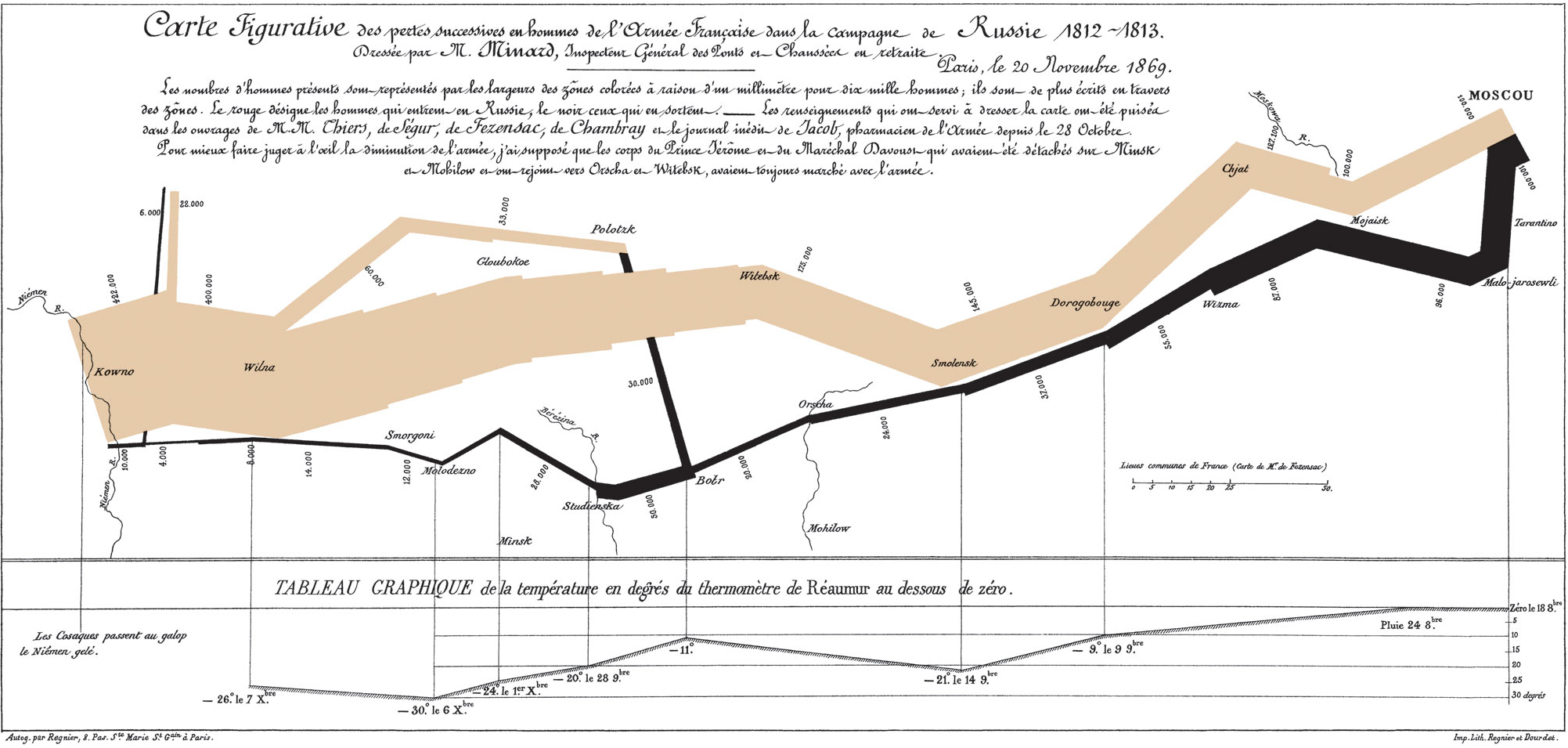
The same was true in Lithuania, which had not been an independent country since it merged with Poland in 1569. But its people, as phlegmatic and mournful as any in Eastern Europe, still had dreams. And so Napoleon had a regiment of Lithuanian Lancers during his famous war against Russia. Their fate is illustrated in this early classic of the visual representation of quantitative data.

Here's a drawing of a Lithuanian Lancer of 1812, in the regulation uniform. My colour notes are attached, but as you can see, it never made it past the pencil stage.