Showing posts with label commentary. Show all posts

Thursday, May 14, 2015

The towers of Siena

One April I cycled to Siena, the rose-red gothic metropolis of central Tuscany that, of all the many beautiful medieval cities in Italy, is perhaps the most beautiful.

I arrived from Florence. In that city, apparently, they have a traditional proverb about Siena:

Siena
Di tre cose e piena:
Torri, campane,
E figge di putane.

I shall leave it untranslated. Let it be a warning to anyone here who’s thinking of visiting this most charming of Italian cities. It should also be a warning about Florence. For a city that for 500 years has prided itself on speaking the purest Italian (except Siena, see below), and producing the best poets (or at least Dante, who counts as more than one), you’d think they’d be able to come up with something better.

Or maybe the point is to express maximum contempt with the least possible effort. I lived in Toronto for a long time, and it makes me wonder: are there poets in Hamilton or Windsor right now, sharpening their pens?


Back to Siena. Norman Douglas summed it up in one word: "hell." I can only say that of all cities I’ve visited, except Venice, it is the most beautiful. Now if only we could get rid of the Senese, who profit from the immigrant labour of southern italy, but refuse to speak to the labourers. Or so I was told by an indignant Sicilian I met on Via Fiorentina.

In Siena they speak, tourist books claim, the most pure and refined Italian to be found in the country, but I’m sceptical. Someplace or another has to have a title like this one, but why is it always a town full of money and visibly smug in its affluence? But this is just predjudice on my part. My command of the language is not sufficient to enable me to judge for myself. All I can say is that in Siena Italian is much easier to understand than in the Veneto, and that here all the women enunciate every letter in ciao, stretching the word out so that it rhymes with meow, like a cat. It’s an enchanting habit.

Monday, November 24, 2014

strolling in the suburbs

Suburbia swells. Once upon a time, Etobicoke was not part of Toronto, and Hackney wasn't in London. It's a familiar process, and it happens in the renaissance capitals of Italy as well. There, suburbs go by the charming name of fraction [frazione]. The term implies that they are part of a whole, but the relationship is often distinctly peripheral. It's easy to visit Florence, for example, without noticing its suburbs.

Some of them are, like Etobicoke or Hackney, so assimilated to the city that their independent existence resides solely in maps and signposts. Among them, Ponte a Mensola:


Some years ago I lived in the east of Florence. I could walk in 20 minutes to the city limits, and frequently did. One of those limits (the north-east) was marked by the former village of Ponte a Mensola, where a small cluster of houses adjoined a tiny stream called the Mensola.

There was nothing to distinguish the place, except that it was most of the way to Settignano, an altogether more famous location. But the cafe by the Mensola was welcoming and the streetscape moderately picturesque. The result was several pictures. You can see others here and here.

Friday, October 31, 2014

Vim Patior


Around the year 1580, a man named Jean Bodin told a grim story. It went like this:

"I heard from the Sieur de Nouailles Abbé de l'Isle, now ambassador in Constantinople, and from a certain Polish gentleman named Pruinski, who was ambassador to France, that one of the chief monarchs of Christendom desired to know the future of his country. He called for a Jacobin Necromancer, who first said mass, and having consecrated the host, cut off the head of a first-born son of ten years, and placed it upon the host. Speaking certain words, and deploying symbols that it is not necessary to know, he asked it what it wanted. But the head said only: 'Vim patior' [I suffer].  And at once the king fell into a frenzy, crying without end that the head should be removed, and so he died insane.

This story is held certain and beyond doubt by everyone in the kingdom in which it took place, notwithstanding that only five people were present at the event."


Our storyteller, Jean Bodin, was a jurist and political theorist in late Renaissance France. In many bestselling works, he argued for freedom of religion and property, a constitutional state, individual freedoms, and against slavery. None of which prevented him from believing fervently in demons and sorcerers. The story above appeared in his book De la démonomanie des sorciers, in which he opined that in cases of witchcraft and sorcery, existing legal protections should be relaxed, because sorcerers were everywhere and must be stamped out. Even kings might practice black magic!

There is, then, little doubt that Jean believed the story told him by the Sieur de Nouailles and the Polish ambassador. But who was this king who dabbled in necromancy and died insane? Several possibilities present themselves - the 16th century was not deficient in mentally deranged monarchs. James V of Scotland died in a delirium in 1512; Erik XIV of Sweden devolved into a Macbeth-like homicidal maniac; Ivan IV of Russia was simply terrible.

But the best possibility is Charles IX of France. Bodin's informant the Sieur de Nouailles served as his ambassador to England, Scotland, and Turkey. As for Pruinski, there were many links between Poland and France in that era: Charles IX's brother Henri was even briefly king of Poland. But the best reasons for the identification of Charles lie in the details of the story itself.

Charles was the king who ordered the infamous St. Bartholomew's Day Massacre in 1572. On that day, by targeted assassination and mob violence, Catholic extremists butchered thousands of protestant Huguenots. It proved a political trauma that reverberated for generations in France. For Jean Bodin, a man who believed sincerely in freedom of religion, it must have been shattering. His final book, the Heptaplomeres, is an interfaith dialogue in which all religions agree to just get along - but he never dared publish it in his lifetime.

Although it is sometimes thought that the massacre was instigated by others, chiefly Charles' mother Catherine de Medici, that did not stop the king from assuming the guilt for the slaughter. He was haunted by the screams of the victims and constantly prayed for forgiveness, leading to his mother branding him a lunatic. He died aged 24.

The parallels in the necromantic anecdote are apparent: the Catholic king murders protestants, who were royal subjects under his protection; a king employs a Catholic sorcerer (Jacobin signifies a Dominican friar, who were often inquisitors), who murders a first-born son. This is not subtle stuff. Children are the most deserving of protection, and first-born sons in particular, who by Biblical Law were considered to represent the future.  


The monarch was supposed to be father of the nation and ultimate protector. This was particularly important to Bodin, who saw the family as the model for the state. For the king to go around butchering babies, then, was to declare him unfit for the role that gave him his authority and legitimacy. The king who did such things was no king at all. And the nation under such a king might express its condition simply: "I suffer."

Whether any part of the story is true, nobody knows. Certainly monarchs have done stranger things. In any case, it makes a good subject for a Halloween illustration.


*Vim patior is Latin; patior means "I suffer" or "I endure," while vim signifies force or violence. A literal translation of the phrase might be "I am suffering on account of violence." But this does little credit to the tense brevity of the Latin, and so I rendered it with the simple "I suffer."


**Here is the original French, transcribed from page 155 of the fourth edition, published by Paul Frellon in 1598:
J’ai appris du Sieur de Nouailles Abbé de l’Isle, et maintenant ambassadeur à Constantinople, et d’un gentilhomme polonais nommé Pruinski qui a été ambassadeur en France, que l’un des grands rois de la chrétienté voulant savoir l’issue de son état sit venir un Jacobin nécromantien, lequel dit le messe, et après avoir consacre l'hostie, sit trancher la tête à un jeune enfant de dix ans premier né qui était préparé pour cet effet et sit mettre la tête sur une hostie, puis disants certaines paroles, et usant de caractères, qu’il n’est pas besoin de savoir, demanda ce qu’il voulait; la tête ne répondit que ces deux mots : Vim patior. Et aussi tôt le roi entra en furie, criant sans fin: "Otez cette tête," et mourut ainsi enragé. Cette histoire est tenue pour certaine, et indubitable en tout le royaume, ou la chose est advenue, combien qu’il n’y eut que cinq personnes quand la chose fut fait.

*** Political legitimacy and accusations of child murder were the theme of last Halloween's creepy illustration as well, which featured the added bonus of cannibalism!


Monday, September 22, 2014

something delicious in Toronto

The smog dog is Toronto's signature street food, thanks to a series of difficult-to-understand bylaws that forbid most other options.

It is a mysterious meat, but perfect in its way. It's garish in appearance, and the flavour sharp, aggressive, and without subtlety. It's best not to think about the ingredients.

Biting into a smog dog is like swallowing a salad of tumourous rats and cigarette butts garnished with petroleum dregs. In short, it encapsulates a vital part of the urban experience.


In my drawing, a student at the University of Toronto is enjoying what the city has to offer.


The drawing was done with a china marker just off St. George Avenue. And as should be obvious, I love smog dogs.

Sunday, April 27, 2014

Fortezza di Basso

A drawing made with red ink and a dip pen, of the monumental Fortezza di Basso in Florence, Italy. I sat outside the walls and let myself get lost in their detail. The effect was a bit overwhelming, much like the fortress itself.

The name, di Basso, signifies simply the lower fortress, to distinguish it from the Belvedere fortress atop the hill to the south of the city. If you draw a line between the two, you cover most of Florence's downtown, significant sites, and public spaces. This is not a co-incidence; the Lower Fortress was built less to keep out enemies than to overawe the citizens of a city that had, already, exiled its ruling family multiple times.

When Cosimo di Medici built the Fortezza di Basso, he wanted to be sure that never happened again. He was successful, but in the process saw the reduction of the great Renaissance city to a police state. It never recovered its old effervescence.

The fortress's walls are unusual; they are faced with solid stone, but every second block is carved into an extruding bulge or hemisphere. This has no military function, but instead evokes the six balls on the coat of arms of the Medici family. They didn't want anyone to forget who was boss.


Friday, April 11, 2014

Sake cups, part two...

What do we want from ceramics? "A degree of dimness, absolute cleanliness, and quiet so complete one can hear the hum of a mosquito."
So said Junichiro Tanizaki. Of course, he was talking about toilets - but then, porcelain is a kind of ceramic itself.
I think the dimness is important. Things that are shiny do not encourage contemplation, which is the opposite of hypnotism. You need a bit of grain or spot to concentrate the attention. A bit of patina to make it look serious.
Of course, as Tanizaki says, the sheen of patina is only the glow of grime. All those oils left by fingers and more fingers. It's how cups should look maybe, until eventually the grime is indistinguishable from a lustrous polish.


Junichiro Tanizaki took a break in 1933 from writing about sexual obsessions to give us a short essay on aesthetics, In Praise of Shadows. The title sums up the contents.

Tarragon made these sake cups in a studio in London, England. You can see others here.

Wednesday, January 29, 2014

Petrognano

It was a cold day in early April that I came cycling down the road from Florence and beheld this view. It was the end of my day, give or take. I had decided to camp in the Val d'Elsa, and this was one of the first views I painted.

Petrognano is little more than an old manor, decayed and gorgeous, adorned with pines and several century's accretion of farm buildings. Perhaps somebody lives there. Perhaps the last descendent of an extenuated clan whose forefathers fought Florence and lost. Or perhaps not.

These days there are olives. I expect there are rental properties for those who like to vacation in the Tuscan hills. There's no store of any sort, although it doesn't matter because several larger communities are within easy driving distance. Biking distance too, if you don't mind hills.


Saturday, November 2, 2013

Daughter of a Memorialist

A recent drawing by Tarragon:


One can find this image in a poem, or perhaps the poem finds the image:

In her is the end of breeding.
Her boredom is exquisite and excessive.
She would like some one to speak to her,
And is almost afraid that I
Will commit that indiscretion.

It's by Ezra Pound, from his earlier period that was still imbued with the self-aware and cautionary dissatisfaction characteristic of artists in the Edwardian period. Soon enough Pound would shift from warnings to denunciations.

As for Tarragon, he too is concerned with the problems of inheritance. It must be very wearing to grow up in the shadow of the great artist; everyone would prefer to be spoken to for him or herself, not their breeding. It is, however, a problem that is nobody's fault.

Thursday, October 31, 2013

A Vision in the Cloister


A drawing for Halloween:


Around the year 1099, something terrible was seen. A monk, walking the halls by night, surprised his superior, Abbot Berard, in the act of cooking and eating a young boy. In shock, he beheld the abbot strip the flesh from the “tender limbs” of the child and devour it piece by piece. He fled the monastery in terror, but morbid curiosity soon got the better of him, and he returned in time to see Berard dipping bread in the dead boy’s brains.

Unfortunately stories of this sort, as the examples of Gilles de Rais and Albert Fish assure us, are sometimes true. But happily, in this case we are dealing only with a “terrible vision” beheld at night. A dream, in other words.

Nocturnal visions may strike us as an improbable avenue of character assassination, but it held weight in the year 1099, for our anonymous dreamer stood before his fellow monks on the following morning, and told them what he had seen. The wise among them considered it a prophecy of God’s judgment.

Of course, we only know about this dream because the historian Gregory of Catino, himself a monk, despised Berard with uncharitable passion. He recorded the vision - as well as Berard’s “untimely and detestable demise” - in his book.

He called his book the Liber gemniagraphus sive cleronomialis ecclesiae pharphensis, a mouthful modern historians have replaced with Farfa Register, after the Italian monastery it chronicles. Within, he detailed Berard’s crimes: an insatiable greed for money, defying the precepts of the order, selling off property owned by the monastery, and neglecting to acquire more, introducing vile and extraneous doctrines. In short, there was a difference of opinion on management styles. Unfortunately for Berard’s posthumous reputation, history is written by the writers.

As every monk is considered a brother, and the abbot their father, for the latter to harm his community is akin to a parent injuring their own child. Hence the grisly strength of the baby-eating metaphor. According to Gregory, even though the dreamer mentioned no names when he described his vision, everyone knew he was talking about Berard.

And there was, moreover, a precedent. Some six decades earlier, a similar dream was recorded at the French monastery of Cluny. There, some visiting Spanish monks dared to celebrate their own festivals separate from the rest of the community, and on the wrong dates. The following night, two of the French monks dreamt that the Spaniards, armed with cooking-forks, had fried a young boy in a large pan, while the boy cried out “Father, they are throwing away what you have given them!”
This evidence was decisive; the newcomers could not sunder the family with their unfamiliar ways.

An equally repulsive story dates from just a few years earlier, this time set in Egypt. One night an important general named Fadl was strolling the halls of the palace in Cairo, when he came upon the Caliph al-Hakim with the body of a young boy. The caliph had just dismembered the child, and was cutting up the internal organs. General Fadl was too shocked to conceal himself, and quickly returned home to set his affairs in order, for he knew he had seen too much and had not long to live.

As an abbot is father to his monks, so a monarch is father to his kingdom; our historian, Sevurus ibn al-Muqaffa, uses the child-dismemberment episode to start off a long recital of al-Hakim’s many crimes against his subjects, including arbitrary executions and mutilations, forced conversions, torture,  interfering in dietary conventions, killing every dog in Egypt, and likewise the pigs, banning raisins, consorting with Satan, and a great deal more.

A thousand years ago, then, child-murder and cannibalism appears to have been a standard calumny against those who upset the proper order of kin relations. Nor was this the end of such slanders, which persist today. But that is far too heavy a subject either for Halloween or this drawing.


Gregorio di Catino, Il Regesto di Farfa, ed. I. Giorgi and U. Balzani, v.5, p.156: De quo videlicet praefato abbate, quadam nocte visio terribilis visa est, scilicet quod tenellum puerum et innocentem, coctum assatumque comederet. Cuius cum cocta membra minutatim incisa pene devorata haberet, quidam ante illum assistentes, cum haec viderent, foras fugerunt prae stupore. Interumque paulo post ingressi, ut huius intuerentur crudelitatis finem, videbant quod iam in cerebro pueri intinctum panem avide manducaret. Et cum hanc quidam frater in capitulo coram cunctis referret somni visionem, illius supresso nomine, idem ipse, ut credimus, abbas, veritatis spiritu compellente, interpretatus est dicens; Pro certo sciatis omnes, quia ille de quo haec visio fuit, est vir mortis, et in rebus pessimis ac nefandis domus huius et mei gravissimi damni, manum tenet flagitiose. Quod qui noverunt mirati sunt,  et cognoverunt hanc dei iudicio prophetiam ab illo fuisse ignoranter prolatam.

Rodulfus Glaber, Historiarum libri quinque III.iv.132: “Quod cum fecissent segregati a ceteris, visum est nocte eadem duobus senioribus loci quod unus de Hispanis fuscina focaria arriperet desuper altare puerum, mitteretque illum in sartaginem prunis plenam, ita clamantem: ‘Pater, pater, quod tu dedisti isti auferunt.’ Quid plura? Apud nos antiqua consuetudo, uti decebat, prevaluit.”

Sevurus ibn al-Muqaffa, History of the Patriarchs of Alexandria, Part six, p. 183.

Friday, March 15, 2013

Emily


Many successful drawings are more about what is left out than what is put in. This is a good thing: representation can never be perfect, so the absences are in some senses the most perfect part of the picture.

Which suggests the road towards the flat black square of Malevich, but in fact the thing about negative space is that it's generated by its reciprocal, the positive space of representation. A picture that is nothing but a white square, or a black one, is not a picture of negative space - it's a picture of white, or black. For what's left out to matter, something has to be put in.


Drawn from life at the Arts Project in London, Ontario, in ten minutes.

Tuesday, February 5, 2013

Venice by night

Mikhail Vrubel found Venice boring. It was of interest "only for his palette." That was not my experience. Even at night, when your palette shrinks to greys and only a muddy simulacra of the daylight colours are visible, the city remains beautiful and ominous. It's a place to feel lonely in.

And to paint. Watercolour at night is not easy. I was alone, and wandering the sestiero di San Marco, but I had my paints and I had plenty of time.


How Vrubel, a painter at once romantic and nihilistic, could have rejected Venice, the most romantic and abnegatory of cities, is a mystery. Perhaps they were too much alike. Sometimes you have to be a little bit dull in order to appreciate the magical. Tolkien retired to the most tedious suburb imaginable. Perhaps magicians read only non-fiction.

Monday, December 3, 2012

Genova Centrale

A quick browse of my landscapes might suggest a fascination with the type of European picturesque aesthetic that prevailed in the 19th century. Nor would that be entirely wrong: I do love a good rendering of medieval architecture.

But I wouldn't ever be content with just ruins and atmospheric crags. One of the great, and rarely mentioned, advantages of making pictures is the ability to see something interesting almost anywhere. I once attempted to interest a buyer in a landscape of a shopping mall some years back. He wouldn't hear of it, so it never got made, but it would have been beautiful! All those horizontal lines!

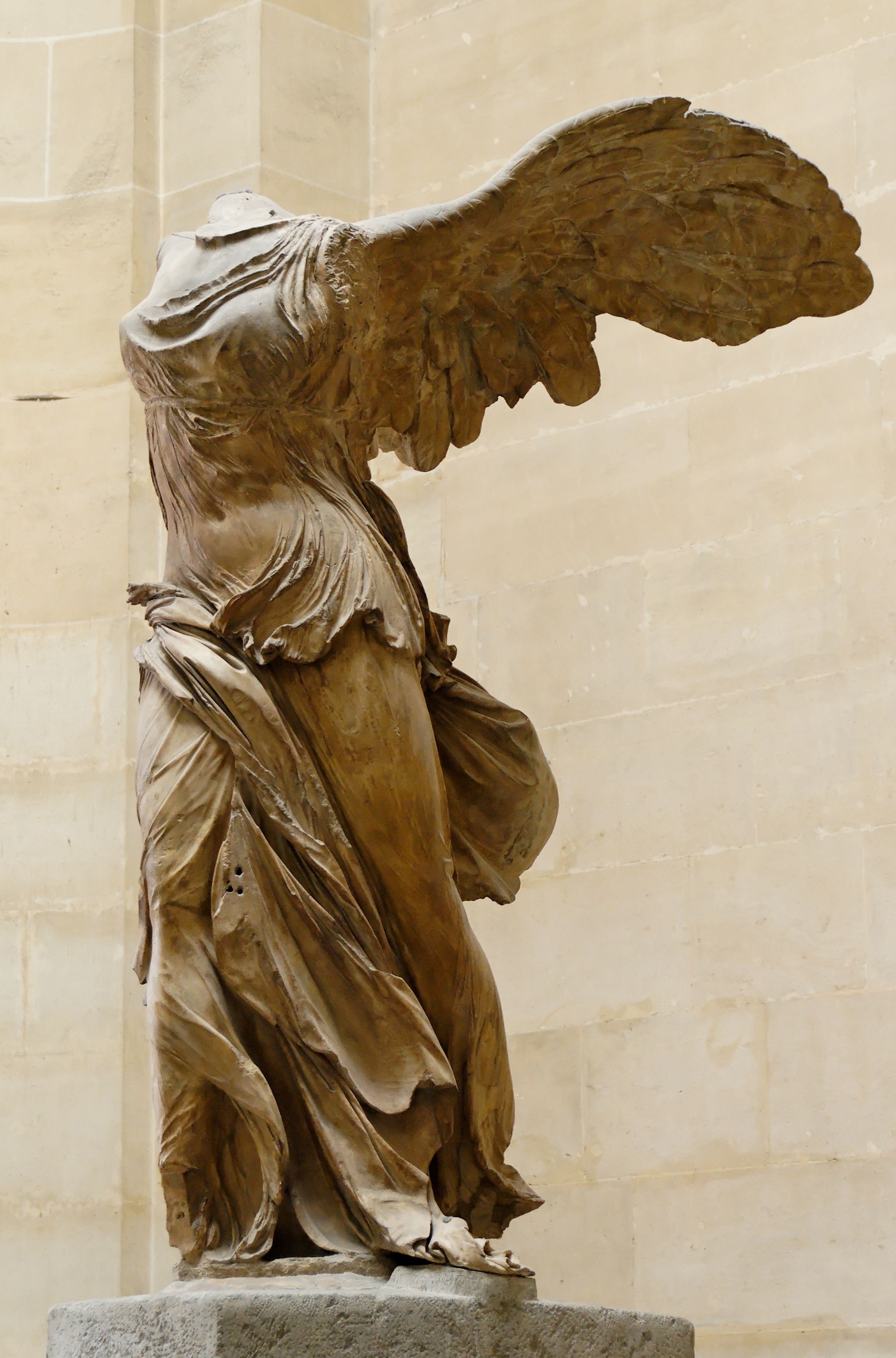
The Futurist Filippo Tommaso Marinetti famously claimed that "a speeding automobile is more beautiful than the Victory of Samothrace." To which one might reply, it depends on the automobile...

But he was making a value judgment. New shiny things good; old landscapes bad. Especially if the old landscapes were dominating and impeding the course of artistic expression. He had a point - Courbet was making the same one when he ran through the Louvre to destroy the Venus de Milo. Marinetti and Courbet could not imagine a world where artists could make whatever they liked, whether it be shiny or important or not.

But that would be a better world, wouldn't it? If you can see beauty everywhere, it's nice to show it to other people.


This is a view from near the main station in Genoa. It's a large screen print worked back in with watercolour. Apologies for the low quality jpeg.

Saturday, November 17, 2012

Miscellanea

Well, let's see. It's an old sketchbook page full of notes.

We have Domenico Fetti, one of those artists who, like Egon Schiele, died young(ish) and unfulfilled. And a peculiar chimney, which I observed atop the house of Guilio Romano, genius, egomaniac and sometime pornographer, the greatest pupil of Raphael.

And also the personal motto of Isabella d'Este - my first exposure to a theme worth exploring.

Lastly, Vincenzo II Gonzaga, Duke of Manuta, who inherited one of the world's great art collections and sold it off to indulge his love of hobbits. That is, dwarfs. Or so my history teacher told me, some years ago now.
It may be true. Dwarfs were big business in the late Renaissance. But the so-called Apartment of the Dwarfs, allegedly built on a small scale for their convenience, has unfortunately turned out to be a model of the Scala Santa in Rome, built for devotional purposes. It can still be seen, sometimes, in the Gormenghast-like pile of the Palazzo Ducale in Mantua.

And various people, of course.
It was all drawn with a an old-fashioned dip pen and india ink. It's a wonder I didn't make a bigger mess.


Monday, November 12, 2012

The Pleasure of Ruins

One of the most interesting phenomenons in the history of architecture is the reuse and transformation of ancient ruins. For us, ruins are often attractive. People go out of their way to enjoy the suggestive aura of dilapidated castles and abandoned factories.

Our generally positive attitude towards ruins is a consequence of living in a rich society. In the past, people were more likely to dismantle a ruin for spare building material, like the Iraqi villagers who burnt a great Assyrian bull to render it into quicklime.

Religious buildings are a special case. For early Christians, Roman temples were an abode of demons. One way to deal with them was to build a church on top of the temple, as in the case of the basilica of San Clemente in Rome, built above an ancient mithraeum. Another approach was simply to consecrate the pagan building to a new patron: in this way the Pantheon (also in Rome) became the church of Holy Mary of the Martyrs.

After the end of the ancient religion, pagan temples no longer posed a threat. By the time of the Renaissance, "past ruin'd Latium" became an object of fascination to artists and scholars.


But the era before the Renaissance remains a mystery. In the 10th century, when Rome was a half-abandoned ghost town fought over by dimly chronicled warlords, a group of Greek monks settled down to live in the ruins of the temple of Mars Ultor ("The Avenger"). Why did they choose that spot? Did the God of War mean something to them, or was it just a convenient pile of stones?

Perhaps the ruins spoke to the monks. In the 5th century, Sidonius Apollinaris wrote of seeing "cattle not only lying in the half-ruined porticoes, but grazing beside altars green with weeds," language which suggests he took some pleasure in the view, even as he deplored it. And Paul the Deacon, in the 8th century, wrote "the dwellings were left deserted by their inhabitants, and the dogs alone kept house... You might see the world brought back to its ancient silence; no voice in the field, no whistling shepherds..." Grim stuff, but beautiful words. Around the same time, an anonymous Anglo-saxon writer penned The Ruin, a meditation that begins:

The wallstone is beautiful
      but broken by fate.

The city is shattered
the old work of giants is falling...


Obviously some people were enjoying the sight of the ruins, even if they didn't go to the 18th century extreme of building fake ones. We still did this in the 20th century, of course, for example at the Guildwood in Toronto.


All this is leading up to a picture of my own, of course:


This is the ruin at Chateau-Bas, in Provence. No one knows to what god the temple was dedicated. What we do know is that at some point, probably in the 11th century, somebody built a small Christian chapel adjoining the ruins of the temple, from which the stones were taken. The temple is now a wreck, but its columns still stand, and it must have been even more impressive when the chapel was built. Today the chapel is dedicated to Saint Cézaire, presumably Caesarius of Arles. We have no way of knowing whether this was the case originally, or who built it, or why they chose the spot they did.


The drawing was done in pencil, in the early afternoon, during a bicycle ride from Cadenet to Salon-de-Provence. It was a pleasant idyll, sadly interrupted by an eruption of kindergarten children. As the teacher said to me as they approached, "Your peaceful solitude, it is over."

Saturday, July 7, 2012

L'Abbaye de Fontfroide

A view of Fontfroide, an old abbey near Narbonne, itself a provincial town enlivened by some beautiful architecture but depressed by dust, heat, and a rather medieval sense of xenophobia.

The abbey's name, which means cold spring, explains its presence in an otherwise bleak almost-desert of bare rocks and low, tough, vegetation. It's a beautiful landscape, but an uninviting one. The route from Narbonne took me through a Roma encampment, an old quarry, and past a mysterious stone fort.


For those that are interested in things medieval, the abbey stands out in the history of persecution. It was a monk of Fontfroide, Peter of Castelnau, whose murder provided the pretext for the Albigensian Crusade, and throughout the Cathar era the abbey served as a centre of Church orthodoxy.

One of its abbots, Arnaud Nouvel, would serve as papal legate in the trial of the templars, but also found the time to protect the rich and powerful against accusations of heresy. A nephew of Nouvel, Jacques Fournier, was also an abbot, and eventually went on to become Pope Benedict XII at Avignon. He was an unrelenting inquisitor, efficient administrator, and an adornment neither to church nor humanity.

Fontfroide lost three-quarters of its tenants during the Black Death, and did not recover until the 17th and 18th centuries, when new buildings were added in the elegant classical style of the period. The monks fled during the revolution, but the abbey's location saved it from harm, and it was refounded by Cistercians from Sénaque in 1858. Prior to the dissolution under the 1901 Law of Congregations, the final abbot of Fontfroide, Père Jean, acquired a saintly reputation.

In 1908 the symbolist artist Gustave Fayet, together with his wife Madeleine, purchased Fontfroide at public auction. There is a story that they wanted to preserve the abbey from the rapacity of such American collectors as George Grey Bernard, who did succeed in taking large chunks of the nearby monasteries Saint-Michel-de-Cuxa and Saint-Guilhem-le-Desért across the Atlantic, where they formed the nucleus of the Cloisters Museum in New York.

In any case, Gustave Fayet used the abbey as a private painting studio, and also lent it out to his friends, most notably the great printmaker Odilon Redon. It remains in private hands to this day.

Thursday, June 28, 2012

Tarragon and War and Peace


A few days ago I posted a drawing of Danielle reading War and Peace. Or more accurately, taking a break from reading it. Here's a picture of Tarragon reading the very same copy.

The difference in their apparel in down to the season. Tarragon read it in March, which can be cold, even in Florence. Especially in Florence, to be honest. Those big marble buildings are designed to keep the heat out and the cool air in, and there was a lot of the latter. Danielle read it in June, and by that time nothing could keep things cool. The Arno valley is humid, mosquito-ridden, and generally squalid in summer.


The drawing was done with china-marker on a large piece of textured paper, with the watercolour added immediately afterwards.

Sunday, June 24, 2012

Woman with a knee brace

A rather sparse composition from a few years ago. The processes of physical injury and recovery can be visually fascinating, perhaps because of the asymmetry they often force on the body. The human form is resonant in our visual part of our brains; it is the easiest shape for us to pick out in any environment, which is why camouflage works not, as is often thought, by blending into the background, but rather by breaking up the recognizable outline.

I wanted the design of this image to reflect the asymmetry of the injury, as well as its arbitrariness. Perhaps it would have been better if I chopped off the leg altogether, but that was not the state of the model. Nor, of course, would I wish it upon her.


It's an etching on zinc, printed at the Open Studio in Toronto.

Wednesday, June 20, 2012

Danielle and War and Peace

An old drawing, showing Danielle with the even older copy of War and Peace that she, I, and my brother passed around in the spring of 2001. We were all very caught up in the adventures of Prince Andrei and Natasha and the others - they kept us distracted during long Italian nights in the days before internet. Don't mention the television. Italian television is dire.

That book is one of the few I wish I still owned for purely sentimental reasons, but it has long since fallen apart.


Thursday, June 7, 2012

The rooftops of Prato

A rapid sketch of some rooftops in Prato. The drawing is an old one, as is visible from the date. That was  my first trip to Italy, and I still remember the bewildered delight I took in the architecture of Tuscany. For a person brought up in North America - land of broad avenues and free-standing buildings - the unplanned conglomerates of Italian housing seemed both suspicious and exotic.

The expectation of space is one of the great privileges of America (and Canada); to enter a land where neighbours were not separated by lawn or road was to embark upon an adventure.


The drawing was done in a sketchbook on heavily textured paper. I have not attempted to clear away the smudges accrued by constant use, nor the the beginnings of a note about the council of Trent.

Wednesday, May 30, 2012

Mortality


I went to Kew Gardens in the summer of last year and purchased this plant.  I call it a name other than what it is known by.  It used to be a strong, hale and happy plant.  It had the look of one that enjoys conversation.  In retrospect I wonder if it was the sort of enjoyment that is valued only by those who lack almost all other pleasures, like a man who never sees the tent we call the sky.  I don't know.  All I know is it never told me it was suffering for want of light and almost overnight its strength failed, and now I am sure it will die, although it lives by the window.  You can not take death masks of plants or I would have done so.